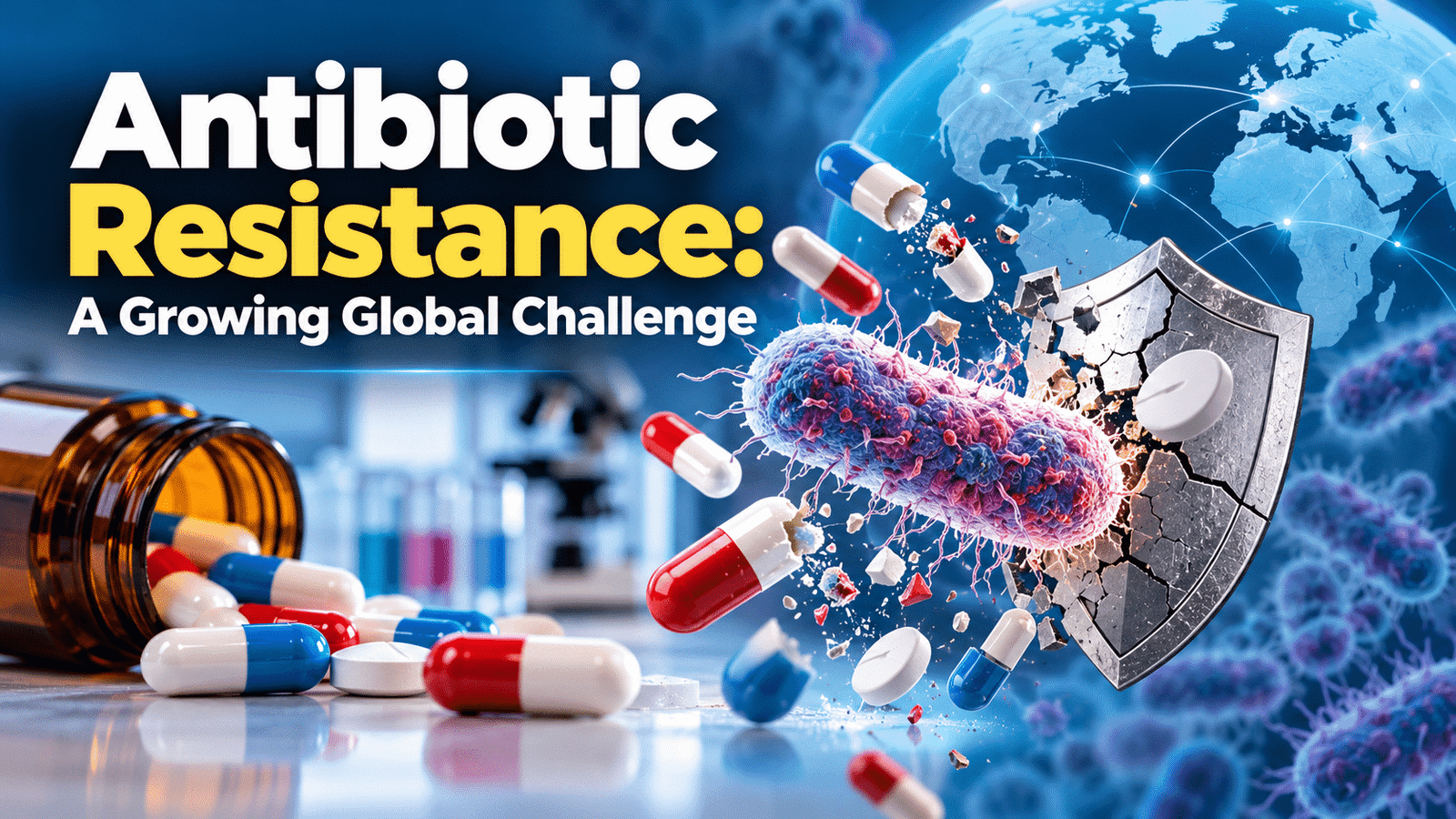
Antibiotic Resistance: A Growing Global Challenge
Introduction
Antibiotics have transformed modern medicine by helping treat bacterial infections that were once life-threatening. They play an essential role in treating infections, preventing complications during surgery, and supporting treatments such as cancer chemotherapy. However, the increasing problem of antibiotic resistance threatens these medical achievements.
According to the World Health Organization (WHO), approximately one in six laboratory-confirmed bacterial infections worldwide in 2023 was resistant to antibiotic treatment. The WHO also reported that resistance increased in more than 40% of the pathogen–antibiotic combinations monitored between 2018 and 2023.
These findings highlight the urgent need for responsible antibiotic use, improved infection prevention, and stronger public awareness. Antibiotic resistance is not just a healthcare issue; it is a global public health challenge requiring action from healthcare professionals, pharmaceutical industries, governments, and the general public.
What Is Antibiotic Resistance?
Antibiotic resistance occurs when bacteria develop the ability to survive or grow despite exposure to antibiotics that would normally kill them or inhibit their growth.
It is important to understand that bacteria become resistant to antibiotics—not the human body. When resistant bacteria cause an infection, the usual treatment may become ineffective, making the infection more difficult to manage.
Antibiotic resistance is one part of the broader problem known as antimicrobial resistance (AMR). AMR includes resistance to medicines used against bacteria, viruses, fungi, and parasites.
Drug-resistant bacteria are sometimes described as “superbugs.” Some resistant infections may require alternative antibiotics, longer treatment, hospital admission, or specialist care.
Source: World Health Organization — Antimicrobial Resistance
Major Causes of Antibiotic Resistance
Antibiotic resistance can develop naturally as bacteria evolve. However, inappropriate antibiotic use and the spread of resistant bacteria accelerate this process.
1. Overuse of Antibiotics
Antibiotics are sometimes used when they are not medically necessary. For example, they do not treat viral infections such as the common cold or influenza.
Unnecessary antibiotic exposure creates selective pressure that favours resistant bacteria, allowing them to survive and multiply.
2. Incorrect Use of Antibiotics
Taking antibiotics without appropriate medical guidance, using leftover medicines, sharing prescriptions, or changing the dose independently can lead to inappropriate treatment.
Patients should follow their prescriber’s instructions and consult a healthcare professional before changing or stopping a prescribed treatment.
3. Inappropriate Prescribing
Prescribing antibiotics without a clear indication, selecting an unsuitable medicine, or using an inappropriate dose or duration can contribute to resistance.
Clinical assessment, relevant laboratory investigations, and evidence-based prescribing help healthcare professionals select appropriate treatments.
4. Poor Infection Prevention and Control
Resistant bacteria can spread through direct contact, contaminated surfaces, unsafe healthcare practices, and inadequate sanitation.
Poor hand hygiene and insufficient infection-control measures can increase the transmission of resistant organisms in hospitals and communities.
5. Antibiotic Use in Animals and Agriculture
Antibiotics are also used in animal health. Inappropriate use in animals can contribute to antimicrobial resistance, and resistant bacteria may spread through contact, food systems, and the environment.
Responsible veterinary prescribing, food safety, and appropriate agricultural practices are important components of resistance prevention.
How Do Bacteria Develop Antibiotic Resistance?
Bacteria can acquire resistance through genetic mutations or by obtaining resistance genes from other bacteria.
Some important resistance mechanisms include:
- Enzyme production: Certain bacteria produce enzymes that destroy or inactivate antibiotics.
- Target modification: Bacteria change the structure of the target at which an antibiotic normally acts.
- Reduced drug entry: Changes in bacterial cell membranes can reduce antibiotic penetration.
- Efflux pumps: Some bacteria actively remove antibiotics from their cells.
- Alternative metabolic pathways: Bacteria may develop alternative ways to perform essential cellular functions, bypassing the antibiotic’s effect.
These mechanisms can make particular antibiotics less effective or ineffective. Some bacteria can also carry multiple resistance mechanisms, complicating treatment.
Understanding these mechanisms is important in pharmaceutical research because it supports the development of new medicines, diagnostic methods, and strategies to preserve existing antibiotics.
Global Impact of Antibiotic Resistance
Antibiotic resistance affects patients, healthcare systems, and economies worldwide.
1. Treatment Failure
Infections that once responded well to commonly used antibiotics may become more difficult to treat. Healthcare professionals may need to select alternative medicines based on clinical findings and susceptibility testing.
2. Increased Healthcare Costs
Resistant infections can require additional laboratory investigations, expensive medicines, longer hospital stays, and extended follow-up care.
3. Increased Risk of Severe Illness and Death
When effective treatment is delayed or unavailable, resistant infections can lead to severe complications and increase the risk of death.
4. Challenges for Modern Medicine
Antibiotics are essential for many medical procedures. If effective antibiotics become less available, procedures such as major surgery, organ transplantation, and some cancer treatments may become riskier.
5. Pressure on Pharmaceutical Research
Resistance creates a continuing need for new antibiotics, improved diagnostic tools, and innovative treatment approaches. However, developing new antibiotics is scientifically challenging, making responsible use of existing medicines equally important.
Antibiotic Resistance in India
Antibiotic resistance is an important public health concern in India, where responsible antibiotic use, laboratory capacity, infection prevention, and public education are essential to controlling its spread.
In November 2025, the Government of India launched the National Action Plan on Antimicrobial Resistance 2.0 (2025–2029). Its priorities include strengthening awareness, education and training, improving laboratory capacity, and enhancing infection prevention and control in healthcare facilities.
A coordinated approach involving healthcare services, veterinary medicine, agriculture, and environmental management is essential to addressing antimicrobial resistance.
Source: Press Information Bureau, Government of India — National Action Plan on AMR 2.0
Strategies to Prevent Antibiotic Resistance
Preventing antibiotic resistance requires cooperation among individuals, healthcare professionals, pharmaceutical companies, and policymakers.
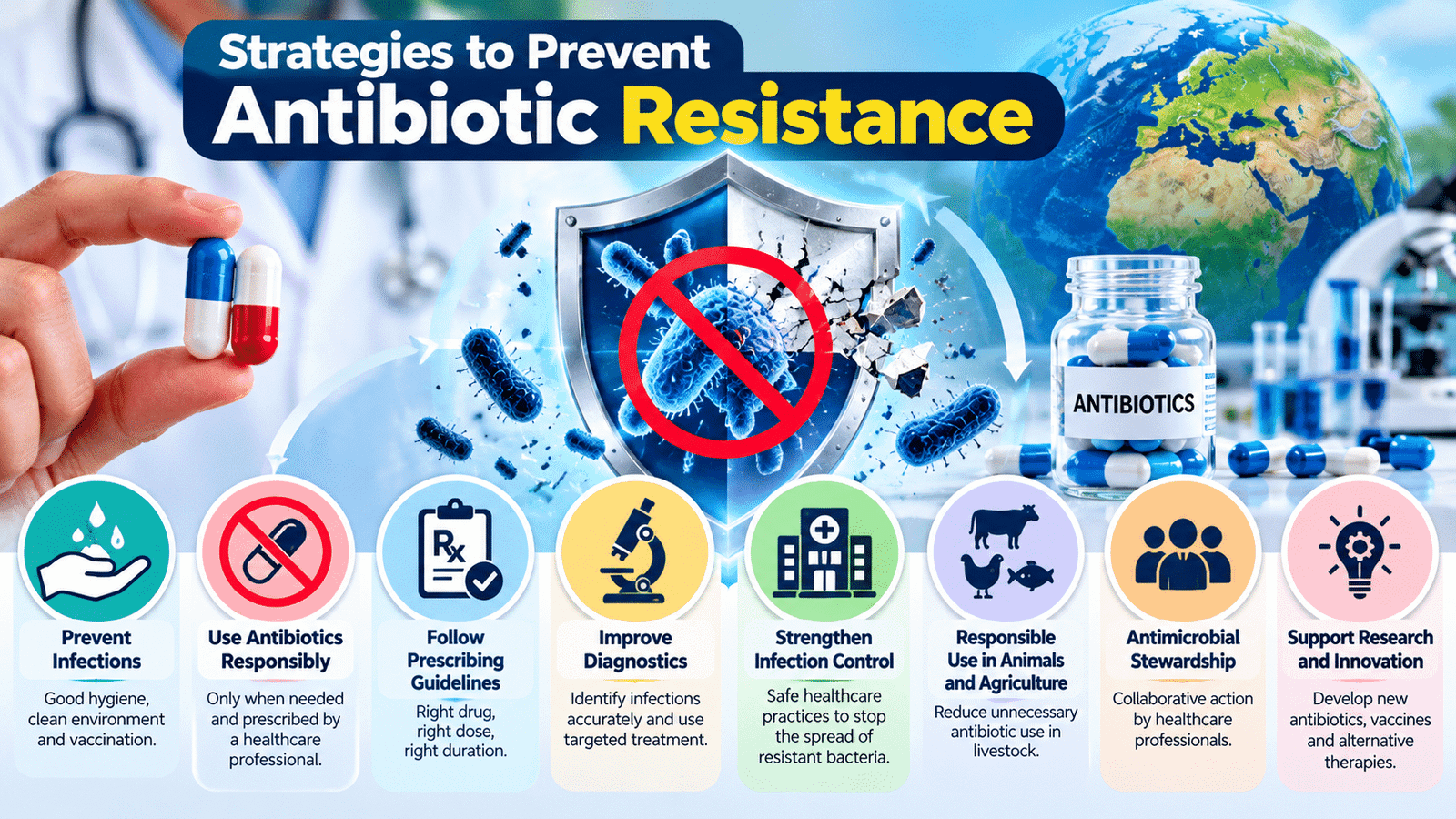
1. Use Antibiotics Responsibly
Antibiotics should be used only when clinically indicated and prescribed by an appropriately qualified healthcare professional. They should not be used for viral infections unless there is a separate, clinically justified bacterial indication.
2. Follow Prescribing Instructions
Patients should take antibiotics exactly as prescribed. They should not independently increase or reduce the dose, share medicines, use leftover antibiotics, or change the treatment duration without professional advice.
3. Strengthen Infection Prevention
Regular handwashing, appropriate sanitation, safe food handling, vaccination where recommended, and effective infection-control practices help prevent infections and reduce the need for antibiotics.
4. Promote Antimicrobial Stewardship
Antimicrobial stewardship means improving how antibiotics are selected, prescribed, administered, and reviewed.
Hospitals and healthcare facilities can support stewardship through evidence-based treatment guidelines, monitoring of antibiotic use, diagnostic testing when appropriate, and review of therapy as laboratory results become available.
5. Improve Diagnostic Facilities
Microbiological culture and antimicrobial susceptibility testing can help identify the organism responsible for an infection and determine which antibiotics may be effective.
Appropriate testing supports targeted treatment and can reduce unnecessary exposure to broad-spectrum antibiotics.
6. Encourage Pharmaceutical Research and Development
The pharmaceutical sector has an important role in developing new antibiotics, rapid diagnostic technologies, vaccines, and alternative treatment strategies.
Equally important are medicine quality, responsible manufacturing, appropriate disposal of pharmaceutical waste, and policies that encourage the sustainable use of antibiotics.
Role of Pharmacists in Combating Antibiotic Resistance
Pharmacists are essential partners in promoting rational antibiotic use and patient safety.
Their responsibilities include:
- Educating patients about correct antibiotic use and adherence to prescribed instructions.
- Discouraging inappropriate self-medication and the sharing of prescription medicines.
- Supporting prescribers in medication review and antimicrobial stewardship.
- Identifying potential drug interactions, contraindications, and medication-related problems.
- Supporting adverse drug reaction reporting and appropriate patient referral.
- Promoting safe medicine storage and disposal practices.
Hospital pharmacists can also participate in antibiotic-use audits, formulary management, treatment review, and multidisciplinary antimicrobial stewardship programmes.
Through patient counselling and collaboration with other healthcare professionals, pharmacists can help protect the effectiveness of existing antibiotics.
Future Perspectives: Can We Overcome Antibiotic Resistance?
Addressing antibiotic resistance requires sustained global action rather than relying solely on the discovery of new medicines.
Future priorities include developing innovative antibiotics, expanding rapid diagnostic testing, improving surveillance systems, strengthening antimicrobial stewardship, and investigating alternative approaches such as bacteriophage-based therapies.
Artificial intelligence may also support drug discovery and help researchers identify promising compounds. However, these approaches require scientific validation, clinical evaluation, and appropriate regulatory oversight before routine use.
The One Health approach is particularly important because human health, animal health, agriculture, and the environment are interconnected. Coordinated action across these sectors can help reduce the development and spread of resistant organisms.
Frequently Asked Questions (FAQs)
1. What is antibiotic resistance?
Antibiotic resistance occurs when bacteria develop the ability to survive or grow despite exposure to antibiotics that would normally control them.
2. What are the main causes of antibiotic resistance?
Important contributing factors include unnecessary antibiotic use, inappropriate prescribing, incorrect use of medicines, poor infection control, and the spread of resistant bacteria.
3. Do antibiotics work against viral infections?
No. Antibiotics treat certain bacterial infections and do not work against viruses such as those responsible for the common cold and influenza.
4. How can antibiotic resistance be prevented?
Prevention includes using antibiotics only when needed, following professional instructions, improving hygiene and vaccination, preventing infections, and strengthening antimicrobial stewardship.
5. What is the role of pharmacists in antibiotic resistance?
Pharmacists help promote appropriate antibiotic use, counsel patients, support medication safety, participate in stewardship programmes, and help prevent inappropriate self-medication.
6. What is antimicrobial stewardship?
Antimicrobial stewardship is a coordinated approach to ensuring that antimicrobial medicines are used appropriately, effectively, and responsibly to improve patient outcomes and limit resistance.
Conclusion
Antibiotic resistance is a growing global challenge that threatens the effectiveness of essential medicines and places increasing pressure on healthcare systems. Unnecessary antibiotic use, inappropriate prescribing, and inadequate infection prevention contribute to the development and spread of resistant bacteria.
Addressing this problem requires responsible antibiotic use, effective antimicrobial stewardship, better diagnostics, stronger infection-control practices, and continued pharmaceutical research.
Every stakeholder has a role to play. By working together, healthcare professionals, researchers, policymakers, pharmaceutical industries, and the public can help preserve the effectiveness of antibiotics for future generations.
Protecting antibiotics today means protecting tomorrow’s healthcare.