
The Role of Pharmacists in Patient Safety: Ensuring Safe and Effective Medication Use
Introduction
Patient safety is one of the most important priorities in modern healthcare. Every patient expects to receive the right medicine, at the right dose, in the right way, with minimal risk of harm. However, errors in prescribing, dispensing, administering, or using medicines can lead to adverse drug events, treatment failure, prolonged hospital stays, and avoidable healthcare costs.
Pharmacists play a vital role in preventing these problems. As medicine experts, they help healthcare teams select, prepare, dispense, monitor, and explain medicines to patients. Their work extends beyond supplying medication to ensuring that treatments are appropriate, effective, and as safe as possible.
The World Health Organization (WHO), through its Medication Without Harm initiative, highlights the importance of coordinated action by patients, caregivers, pharmacists, prescribers, and healthcare organisations to reduce avoidable medication-related harm.
As healthcare continues to evolve, pharmacists remain essential partners in building a safer and more reliable healthcare system.
What Is Patient Safety?
Patient safety refers to reducing the risk of avoidable harm associated with healthcare and preventing errors that may negatively affect patients.
Medication safety is an important component of patient safety. It involves preventing and managing risks throughout the medication-use process, from prescribing and dispensing to administration and monitoring.
Medication-related problems may include:
- Incorrect medicine selection or dispensing.
- Wrong dose, frequency, or route of administration.
- Drug–drug or drug–food interactions.
- Allergic reactions and adverse drug reactions.
- Duplicate therapy or unnecessary medication.
- Poor patient understanding of treatment instructions.
- Errors during hospital admission, transfer, or discharge.
Pharmacists help identify these risks, recommend appropriate interventions, and communicate with patients and other healthcare professionals to improve treatment safety.
Why Are Pharmacists Important in Patient Safety?
Medicines can provide substantial health benefits when used correctly, but inappropriate use may cause harm. Patients taking multiple medicines, older adults, children, and people with kidney or liver impairment may require additional medication review and monitoring.
Pharmacists have specialised knowledge of drug formulations, pharmacology, therapeutic uses, contraindications, dosage regimens, and potential side effects. This knowledge allows them to identify medication-related risks and support safe treatment decisions.
According to the WHO’s Medication Without Harm initiative, improving medication safety requires action across prescribing, preparation, dispensing, administration, and monitoring. Pharmacists contribute to safety at each of these stages within their professional scope.
Major Roles of Pharmacists in Patient Safety
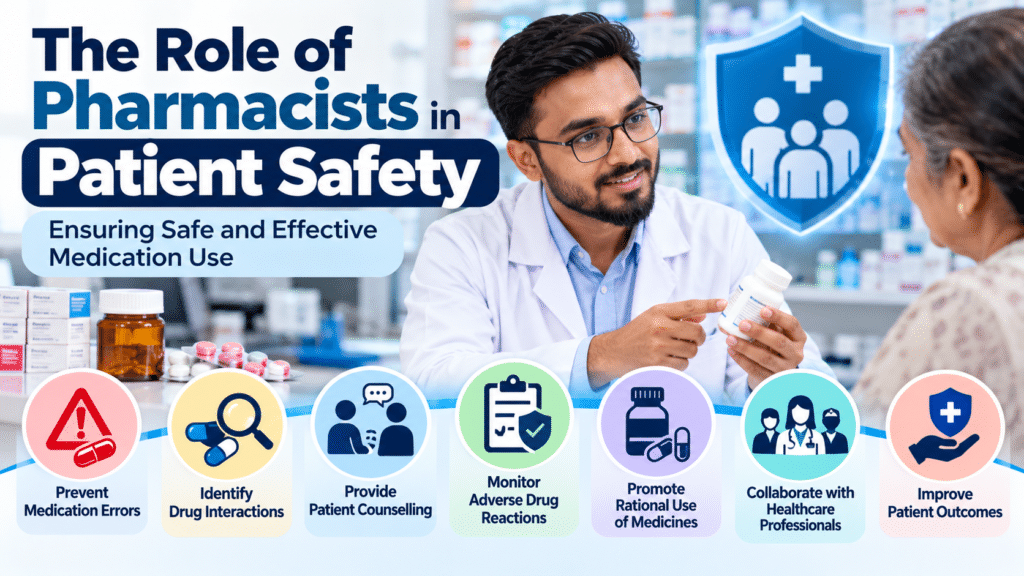
1. Preventing Medication Errors
Medication errors are preventable mistakes that may occur during the prescribing, dispensing, administering, or use of medicines.
Examples include dispensing the wrong strength, selecting a medicine with a similar name, misinterpreting a prescription, or providing unclear instructions.
Pharmacists help reduce these errors by:
- Reviewing prescriptions for completeness and appropriateness.
- Verifying the medicine, strength, dosage form, and directions.
- Checking calculations when doses require individual adjustment.
- Identifying unclear or potentially unsafe prescriptions.
- Confirming relevant patient information before dispensing.
- Maintaining accurate dispensing records and following safety procedures.
When a potential error is identified, the pharmacist should contact the prescriber or relevant healthcare professional to clarify the issue before proceeding, where required.
These checks help improve the accuracy of medication use and reduce preventable harm.
2. Identifying Drug Interactions
Drug interactions may occur when one medicine changes the effect of another medicine, food, drink, or certain health conditions.
Some interactions can reduce treatment effectiveness, while others may increase side effects or cause serious complications.
For example, combining certain anticoagulants with medicines that increase bleeding risk may require careful assessment and monitoring.
Pharmacists review patients’ medication lists to identify possible interactions, duplicate therapies, contraindications, and other medication-related concerns. They may recommend monitoring, an alternative treatment, or consultation with the prescriber when necessary.
Patients should tell their pharmacist about all medicines they take, including prescription medicines, over-the-counter products, herbal preparations, and dietary supplements.
3. Providing Patient Counselling
Patient counselling is one of the most important responsibilities of a pharmacist. Even when a medicine is prescribed correctly, misunderstanding its instructions can lead to poor treatment outcomes.
Pharmacists explain:
- The purpose of the medicine.
- The correct dose, timing, and route of administration.
- Whether it should be taken with food or on an empty stomach.
- Common side effects and important warning signs.
- Storage requirements and precautions.
- What to do if a dose is missed, according to the medicine’s instructions.
- When to seek medical attention.
For example, a pharmacist may demonstrate the correct use of an inhaler or explain how to measure a liquid medicine accurately.
Counselling should use clear, understandable language and take account of the patient’s age, health literacy, communication needs, and cultural context.
4. Monitoring Adverse Drug Reactions
An adverse drug reaction (ADR) is a harmful and unintended response associated with the use of a medicine.
Some reactions may be mild, while others can require urgent medical attention. Pharmacists help patients understand potential adverse effects and identify symptoms that may need further assessment.
Their responsibilities may include:
- Reviewing patients for possible medicine-related problems.
- Identifying suspected adverse drug reactions.
- Advising patients when to seek medical care.
- Documenting relevant information.
- Reporting suspected reactions through appropriate pharmacovigilance systems.
- Communicating with prescribers and other healthcare professionals.
Pharmacists should not assume that every symptom is caused by a medicine. Suspected reactions need appropriate assessment, especially when symptoms are severe or potentially life-threatening.
Pharmacovigilance helps healthcare systems collect and evaluate medicine-safety information so that emerging risks can be identified and managed.
5. Promoting Rational Use of Medicines
Rational medicine use means that patients receive medicines appropriate to their clinical needs, in suitable doses, for appropriate periods, and at a reasonable cost.
Pharmacists support rational medicine use by helping prevent unnecessary duplication, inappropriate self-medication, and avoidable use of medicines.
They can also explain why antibiotics do not treat viral infections, discourage the sharing of prescription medicines, and support antimicrobial stewardship programmes.
Within their authorised scope, pharmacists collaborate with prescribers to identify opportunities to improve treatment and reduce medication-related risks.
6. Supporting Medication Reconciliation
Medication reconciliation is the process of comparing a patient’s existing medicines with the medicines prescribed at a new stage of care.
It is particularly important when patients are admitted to hospital, transferred between healthcare facilities, or discharged home.
During these transitions, discrepancies can occur. A medicine may be unintentionally omitted, a dose may be recorded incorrectly, or a medicine may be continued when it is no longer required.
Pharmacists help identify and resolve such discrepancies by reviewing medication histories, checking available records, consulting patients and caregivers, and communicating with the healthcare team.
A reliable medication list can improve continuity of care and reduce preventable medication errors.
7. Promoting Safe Use of High-Risk Medicines
Some medicines carry a greater risk of serious harm if used incorrectly. These may include anticoagulants, insulin, opioids, and certain anticancer medicines.
The risks depend on the specific medicine, the patient, and the circumstances of use.
Pharmacists can support safer use by reviewing doses, checking relevant laboratory results when available and appropriate, reinforcing monitoring requirements, and ensuring that patients understand essential precautions.
Healthcare organisations can strengthen these efforts through standardised procedures, staff training, appropriate monitoring, and clear communication systems.
8. Encouraging Medication Adherence
Medication adherence refers to how well a patient follows an agreed treatment plan.
Poor adherence may occur because of forgetfulness, confusing instructions, side effects, financial difficulties, or concerns about treatment.
Pharmacists help identify these barriers and work with patients to find practical solutions.
Possible interventions include simplifying instructions where clinically appropriate, using reminder systems, explaining treatment benefits, and discussing concerns with the prescriber.
Rather than blaming patients, pharmacists should encourage open communication and help address the reasons a treatment plan may be difficult to follow.
9. Ensuring the Quality and Safe Storage of Medicines
Patient safety also depends on the quality and integrity of pharmaceutical products.
Pharmacists help ensure that medicines are obtained through appropriate supply channels, stored under required conditions, and dispensed before their expiry dates.
Depending on their workplace, responsibilities may include monitoring temperature-sensitive stock, checking packaging integrity, maintaining storage records, and identifying suspected substandard or falsified products.
For example, certain vaccines and biological medicines require strict temperature control. Improper storage may compromise product quality and effectiveness.
Pharmacists can also guide patients on medicine storage and the safe disposal of unused or expired products according to local guidance.
10. Collaborating with Healthcare Professionals
Patient safety improves when healthcare professionals communicate effectively and share relevant information.
Pharmacists collaborate with doctors, nurses, laboratory professionals, and other members of the healthcare team to support appropriate treatment decisions.
Their contributions may include medication reviews, dose-related recommendations, identification of interactions, medicine information services, and monitoring plans.
They can also participate in clinical discussions and hospital medication-safety committees.
Such teamwork helps ensure that decisions take account of the patient’s clinical condition, existing treatment, and potential medication-related risks.
Role of Pharmacists in Different Healthcare Settings
Community Pharmacy
Community pharmacists are often among the most accessible healthcare professionals. They support patient safety by checking prescriptions, explaining how medicines should be used, identifying potential medication problems, and directing patients to appropriate medical care.
They can also promote vaccination where authorised, provide medicine-related health education, and discourage inappropriate self-medication.
Hospital Pharmacy
Hospital pharmacists contribute to safe medicine selection, procurement, preparation, dispensing, and monitoring.
They may participate in clinical ward rounds, medication reconciliation, antibiotic stewardship, therapeutic drug monitoring, and reviews of complex medication regimens.
They also support systems designed to reduce dispensing and administration errors.
Clinical Pharmacy
Clinical pharmacists work closely with healthcare teams to optimise medication therapy for individual patients.
Their work may involve assessing drug therapy, identifying medication-related problems, reviewing laboratory results, recommending dose adjustments, and monitoring treatment outcomes.
The exact responsibilities depend on local regulations, clinical privileges, and institutional policies.
Pharmaceutical Industry
Pharmacists working in the pharmaceutical industry contribute to medicine quality and safety through activities such as quality assurance, quality control, pharmacovigilance, regulatory affairs, and manufacturing oversight.
These functions help ensure that medicines are manufactured according to applicable standards, appropriately monitored for safety, and supported by accurate product information.
Technology and the Future of Medication Safety
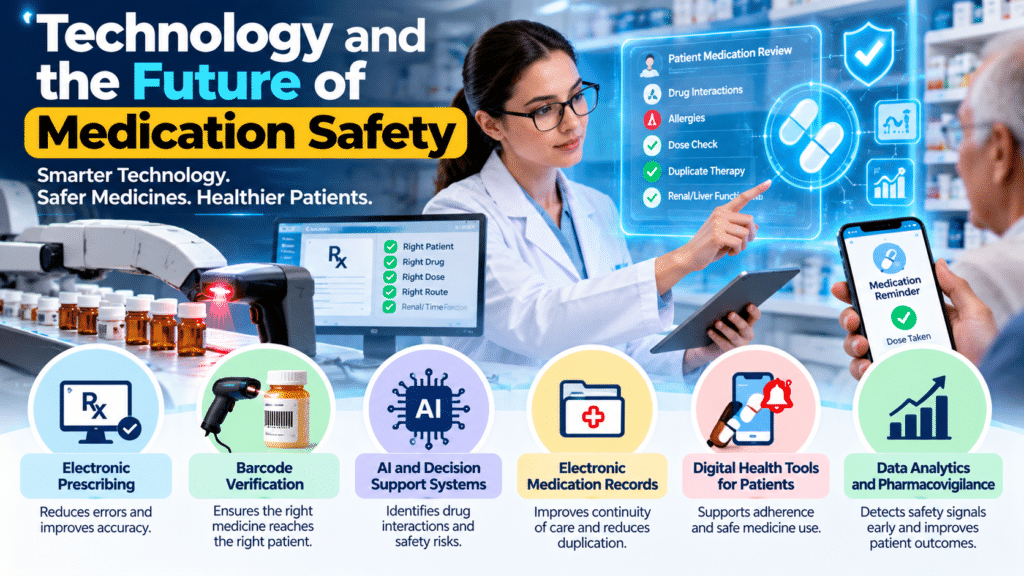
Digital technologies are increasingly used to support medication safety.
Electronic prescribing can improve prescription legibility, while clinical decision-support systems may flag potential drug interactions, allergies, or dose-related concerns.
Barcode verification, electronic medication records, automated dispensing systems, and digital adverse-event reporting can also support safer medication processes when implemented appropriately.
Artificial intelligence may help identify medication-related risks and support clinical decision-making. However, digital systems can generate incorrect alerts, miss relevant information, or introduce new workflow problems.
Technology should therefore complement—not replace—the clinical judgement of pharmacists and other healthcare professionals. Staff training, system evaluation, patient privacy, and clear accountability remain essential.
How Patients Can Work with Pharmacists to Stay Safe
Patient safety is a shared responsibility. Patients and caregivers can take practical steps to make medicine use safer.
Know: Understand what each medicine is for and how it should be used.
Check: Review medicine names, instructions, expiry dates, and relevant precautions with a healthcare professional.
Ask: Speak with your pharmacist or prescriber whenever instructions are unclear or a medicine causes concern.
Patients should also maintain an updated list of all medicines they use, disclose known allergies, mention supplements and non-prescription products, and inform healthcare professionals about changes in their health.
These habits support the WHO’s broader approach to medication safety and help patients participate more actively in their care.
Challenges Faced by Pharmacists in Patient Safety
Although pharmacists play a significant role in medication safety, several challenges can limit their effectiveness.
These include heavy workloads, staffing shortages, incomplete access to patient records, limited time for counselling, fragmented communication, and insufficient medication-safety reporting.
In some settings, inadequate technology and limited opportunities for continuing professional education can create additional barriers.
Healthcare organisations can address these challenges through appropriate staffing, ongoing training, improved communication, access to relevant clinical information, and systems that encourage the reporting and analysis of errors without unfair blame.
Pharmacists also need support from policymakers, regulators, healthcare leaders, and the wider clinical team to fulfil their patient-safety responsibilities effectively.
Conclusion
Pharmacists are essential to patient safety because they help ensure that medicines are selected, dispensed, stored, and used appropriately. Through prescription review, interaction screening, patient counselling, adverse reaction monitoring, medication reconciliation, and collaboration with healthcare professionals, they help prevent avoidable medicine-related harm.
Their role continues to expand as healthcare systems adopt digital technologies, manage increasingly complex treatments, and focus on patient-centred care.
Improving patient safety requires more than individual vigilance. It requires reliable systems, open communication, continuous education, and cooperation among patients, pharmacists, prescribers, and healthcare organisations.
Safe medicines use begins with knowledge, careful review, and effective communication—and pharmacists help bring all three together.
Frequently Asked Questions (FAQs)
1. What is the role of a pharmacist in patient safety?
Pharmacists help prevent medication errors, identify drug interactions, provide patient counselling, monitor suspected adverse reactions, and promote appropriate use of medicines.
2. How do pharmacists prevent medication errors?
They review prescriptions, verify medicine details, identify potential interactions and contraindications, clarify unclear orders, and follow safe dispensing procedures.
3. Why is patient counselling important?
Patient counselling helps people understand how to use medicines correctly, recognise important side effects, follow treatment instructions, and know when to seek medical advice.
4. What is pharmacovigilance?
Pharmacovigilance is the science and set of activities concerned with detecting, assessing, understanding, and preventing adverse effects and other medicine-related problems.
5. How do pharmacists help prevent adverse drug reactions?
They review medication histories, identify potential risks, educate patients about warning signs, communicate concerns to prescribers, and report suspected reactions through appropriate systems.
6. What is medication reconciliation?
Medication reconciliation involves comparing a patient’s existing medicines with the medication plan at a transition of care to identify and resolve discrepancies.
7. What is the WHO’s Medication Without Harm initiative?
It is a WHO global patient-safety initiative designed to encourage coordinated action to reduce avoidable harm associated with medication use.